Introduction to Black Holes: The Cosmic Enigma
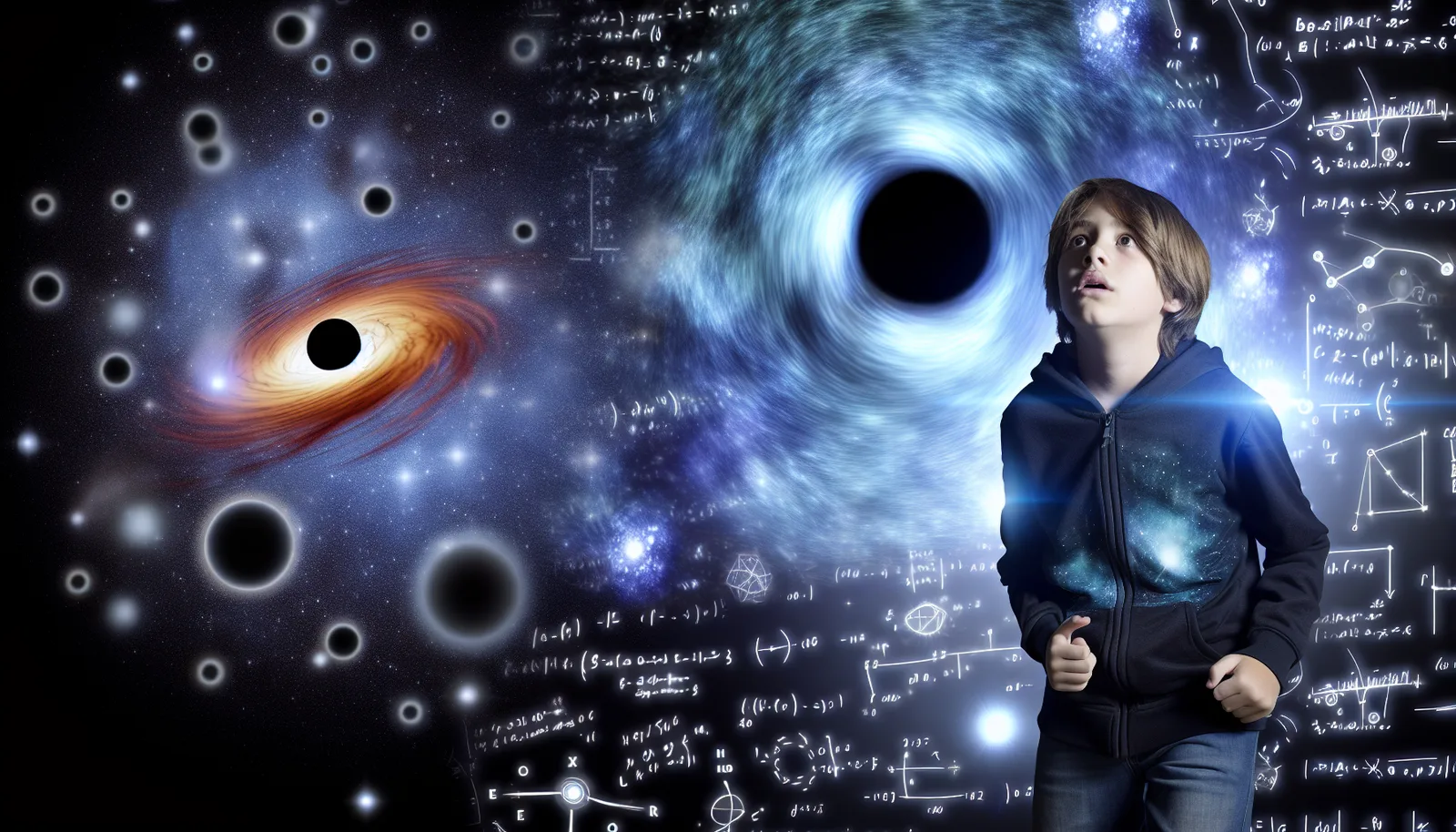
Did you know that a black hole is a point in space with a gravitational pull so strong that even light cannot escape from it? As a young boy, I used to wonder about these mystifying phenomena in a universe full of unexplained mysteries. This profound curiosity propelled my path towards becoming an expert in astronomy. Now, my aim is to unveil to you the majestic and captivating mysteries of black holes.
Unraveling the Unseen: The First Black Hole Image
In April of 2019, the veil was lifted off black holes when astrophysicists finally managed to capture an image of one. The image is of a black hole located in a galaxy called Messier 87. The ability to see a black hole firsthand instigated a flood of new discoveries and questions in the world of astronomy.
10 Astonishing Mysteries of Black Holes Revealed
With a greater understanding of these cosmic wonders, scientists have uncovered numerous fascinating facts about black holes. Here are ten that will leave you absolutely intrigued:
1. How are Black Holes Formed?
Black holes are formed from the remnants of massive stars. When such a star has exhausted the fuel it needs for nuclear fusion, it undergoes a dramatic collapse under its own gravitational force, leading to the creation of a black hole.
2. Not Just a Vacuum Cleaner
Contrary to popular belief, black holes do not simply suck up everything around them. Rather, objects need to be very close to the black hole to be affected by its extreme gravitational pull.
3. Can Black Holes Die?
Theoretical physicist Stephen Hawking proposed that black holes can eventually disappear in a process he called ‘Hawking Radiation’. It’s an incredibly slow process that has never been observed in nature.
4. The Event Horizon: Point of No Return
The event horizon of a black hole is like the edge of a waterfall. Beyond this point, anything falling into the black hole cannot escape, not even light – hence the name “black hole”.
5. Black Holes: A Time Machine?
Theory suggests that time slows near a black hole. So, if you were able to orbit a black hole without falling in, you would potentially experience time at a slower pace compared to someone further away.
6. Stellar Black Holes vs. Supermassive Black Holes
There are two main types of black holes. Stellar black holes are formed from collapsing stars, while supermassive black holes, which are millions to billions times more massive, exist at the center of galaxies.
7. Do Black Holes Move?
Yes, they do. Black holes move through space just like stars and planets.
8. Can Black Holes Collide?
When two black holes spiral in towards each other, they can merge to create a single, larger black hole. This event is so cataclysmic it sends ripples through the fabric of spacetime itself!
9. Can Anything Escape from a Black Hole?
While nothing can escape a black hole under normal circumstances, according to quantum theory, some particles can ‘tunnel’ out. But at the moment, this is just pure theory.
10. Are Black Holes Really Black?
Not exactly. They’re more of a very, very dark shade of grey. When black holes consume matter, they emit a faint light, known as Hawking radiation.
In Conclusion: The Mystifying Beauty of Black Holes
Black holes, despite being some of the most intriguing entities in the universe, continue to baffle experts. The recent discoveries and the captured image have propelled our understanding forward, but many questions remain unanswered. As we unravel more secrets about these cosmic enigmas, perhaps one day we’ll fully uncover the mysteries surrounding black holes.